
17 October 2025 Back to News
Melina Mercouri in the Museum’s photographs
Saturday, October 18 marks the 105th anniversary of the birth of Melina Mercouri (1920–1994) – the woman who left her mark on 20th-century Greece with her passion, talent and voice. An actress of international renown, a fighter against the junta, and a politician with vision, Merkouri was a symbol of freedom, art, and Greekness.
The daughter of a political family (her father was Stamatis Merkouris, a member of parliament and minister of public order and public works), she stood out early on for her acting skills, participating in theater and film productions in Greece and France.
With “Never on Sunday” by American director Jules Dassin (1960), she won the Best Actress Award at the Cannes Film Festival and was nominated for an Oscar for Best Actress. Her collaboration and marriage to Dassin made her a global figure in Greek cinema.
During the dictatorship (1967–1974), her voice became an international symbol of resistance. From exile, she denounced the junta, participating in events and concerts in support of freedom. Her phrase “I was born Greek and I will die Greek” went down in history as a response to Stylianos Pattakos' decision to strip her of her Greek citizenship.
As Minister of Culture (1981–1989, 1993–1994), she was the longest-serving minister of the post-dictatorship era. She believed that culture “is the soul of society” and worked to promote a culture that was open to all. Two of the most important moments of her ministerial career were when she raised the issue of the return of the Parthenon Marbles (1982) and when she inspired the institution of the “European Capitals of Culture” (1985), establishing Greece's position on the European cultural map.
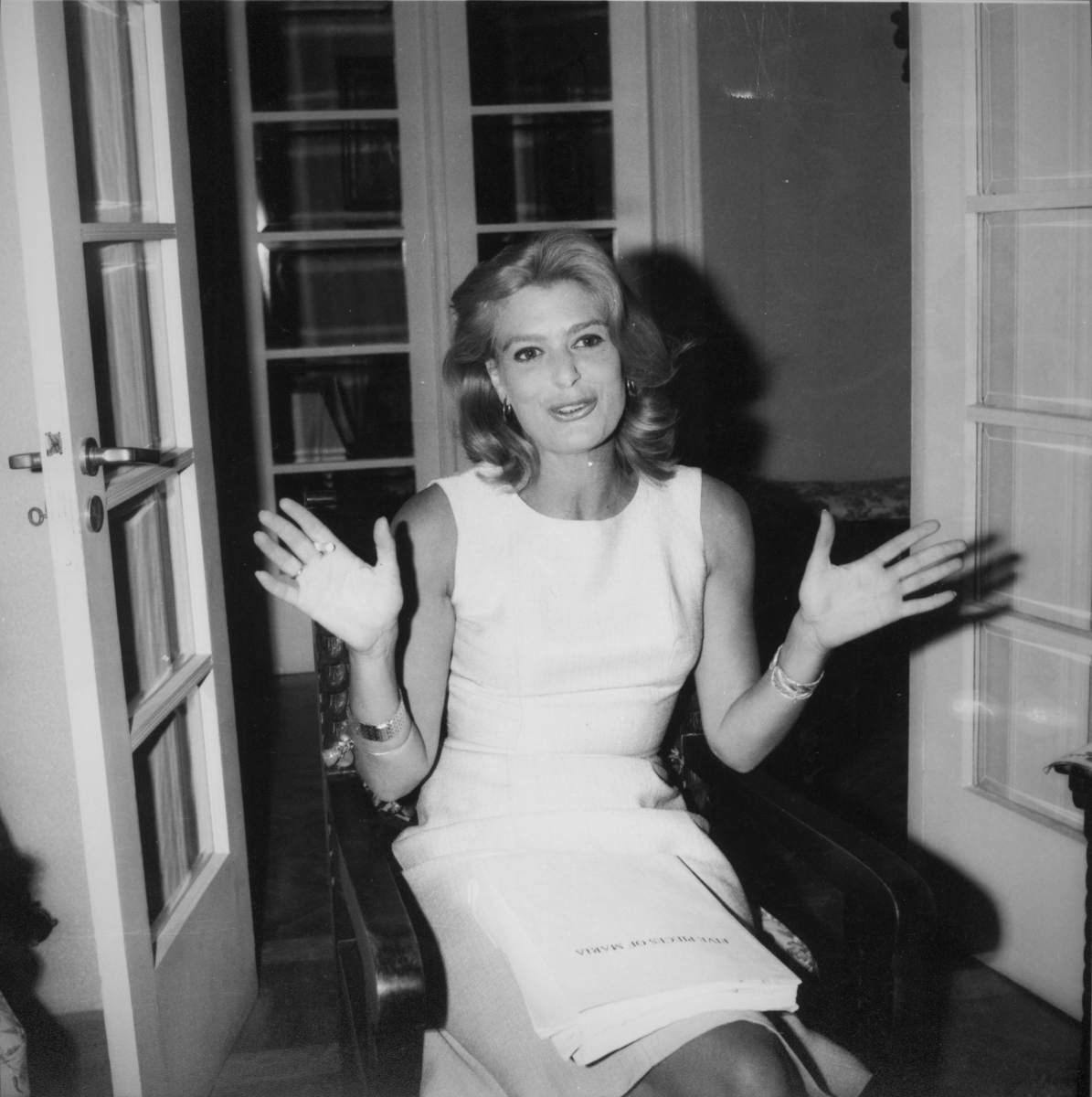
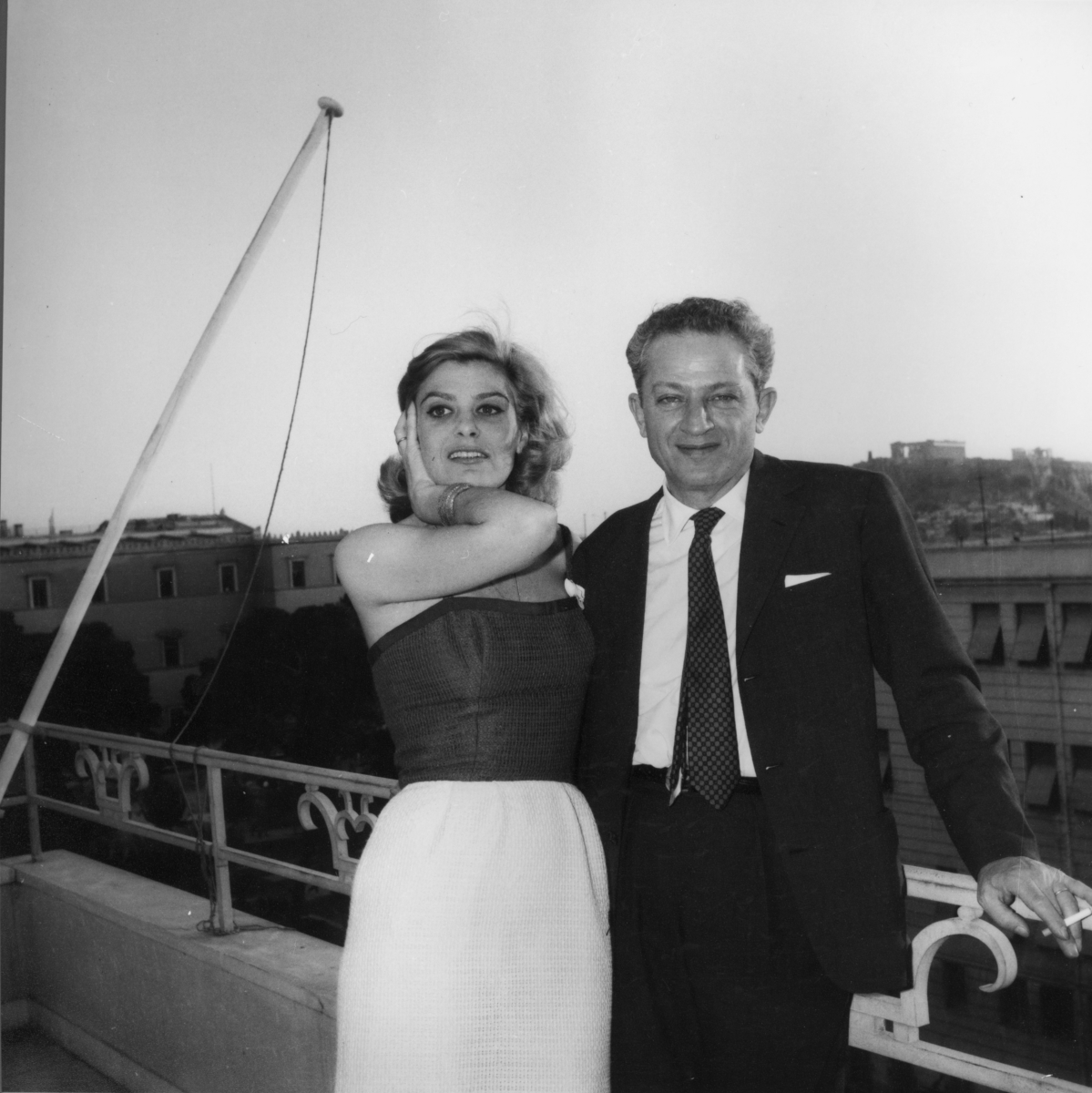
On the occasion of the 105th anniversary of her birth, the OTE Telecommunications Museum presents two telephotos from its collection (Floros Brothers Archive – Nikos L. Floros), which probably date back to the early 1960s. In the first, the camera captures Melina, probably during the preparation of a project, with script pages at her feet (the title “Five Pieces of Maria”) at her feet, but it was never made into a film. In the second, she is pictured with Jules Dassin against the backdrop of the Acropolis.
More faces and moments from the political, social, athletic, and cultural life of the country during the period 1949-1988 are captured in the collection of 13,320 telephotographs of the Telecommunications Museum.