

27 October 2025 Back to News
Communications in the War of 1940 through the Collection of the Telecommunications Museum
It is often written that during the Greek-Italian War of 1940, communications were a crucial factor in the organization and effectiveness of military operations. However, much of the fighting in the mountains of Pindus was conducted using means dating back to World War I, such as optical and electric telegraphs. Although telephone lines provided rapid communication between command centers and forward units, they were often cut due to heavy bombardments or harsh weather conditions. Wireless radios were scarce, and the shortages in communications were significant.
The antiquated nature of the telecommunications equipment is evident in the use of flying messengers, namely pigeons. The Greek Army had acquired special pairs of pigeons from France in 1926, and the following year permanent dovecotes were established in Athens and Thessaloniki. However, during the War, all attempts at communication using pigeon-carried messages (the note tied to the pigeon’s leg) were unsuccessful. Eventually, according to the testimony of a Reserve Second Lieutenant of the Engineers, the pigeons served only as food for the soldiers. It is also worth noting that during the war even primitive means such as fire signals were used.
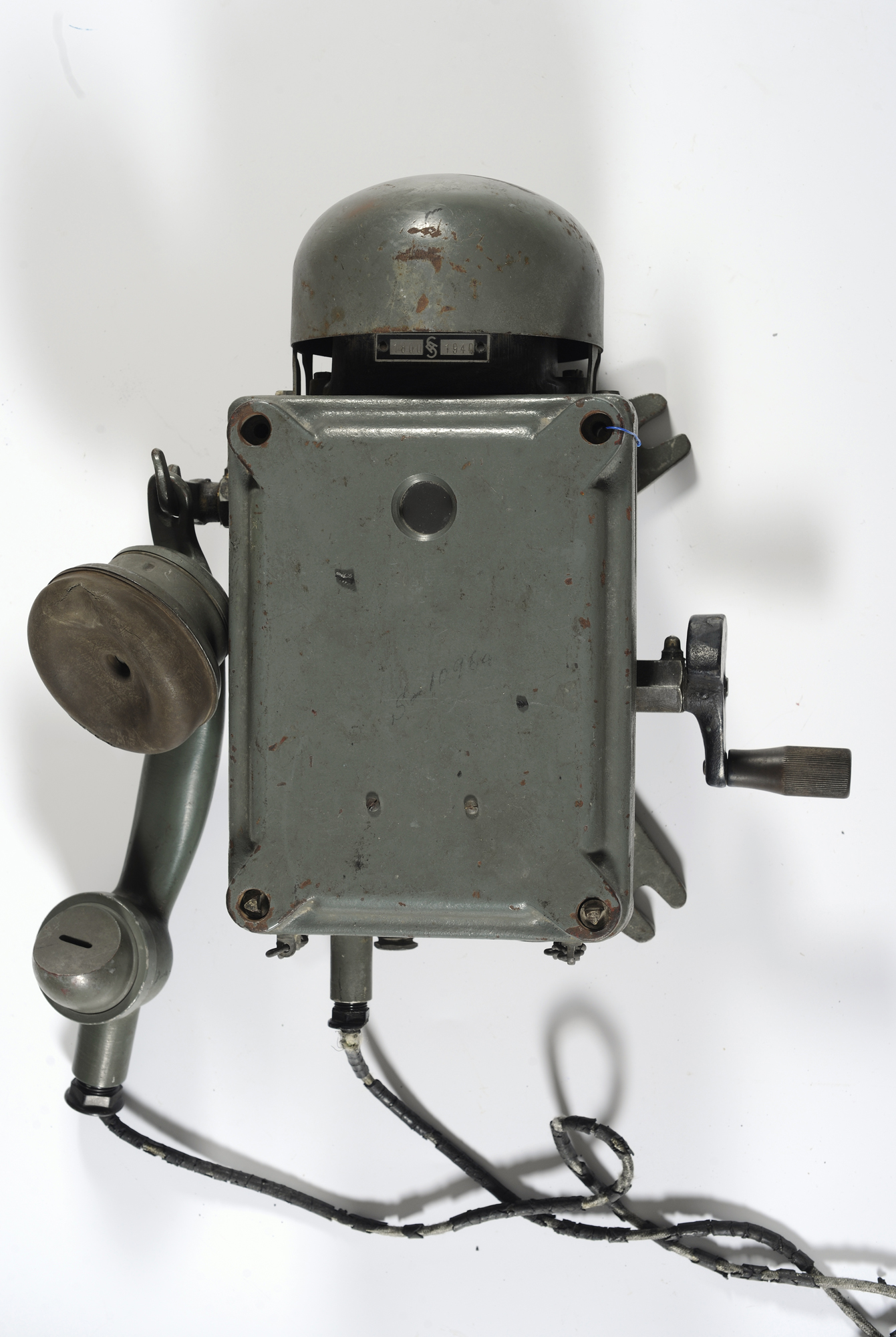
In the fortifications, standard civilian telephones made by AETE, type Lorenz, were used. However, in a Greek newsreel film of 1939, a wall-mounted magnetic telephone of the type Festungsfernsprecher 38, manufactured by Siemens & Halske, is shown in use in a Greek fort. The appearance of this state-of-the-art device served more of a propagandistic purpose than reflected the actual state of communications in the Greek Army.
As for the cryptographic systems used to prevent the disclosure of plans, they were not particularly successful. The British ambassador in Athens frequently informed the Foreign Office that the Italians and Germans had managed to decipher Greek telegrams.
Despite the asymmetric and varied conditions under which communications were deployed at the front, the experience of 1940 highlighted the decisive role of telecommunications in modern warfare, emphasizing the need for secure, flexible, and rapid communication channels. After the war, Greece as well as the Great Powers placed greater importance on the development of wireless networks and the science of cryptography.
Photographs from the left:
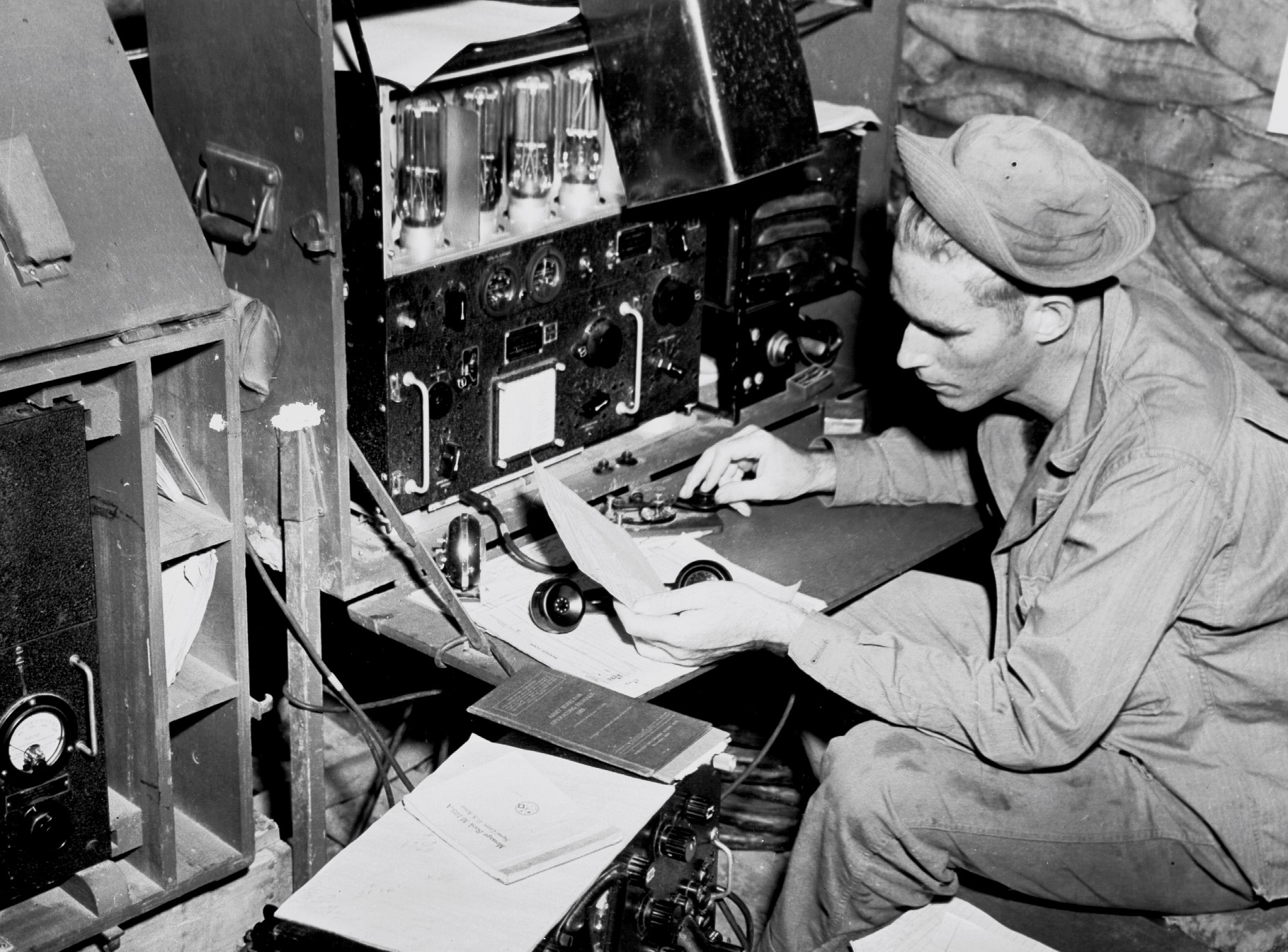
- Transmitter from World War II.
- Galvanometer, specially designed for use by military services. Galvanometers were essential for underwater telegraph communications, where signals traveled many miles without intermediate amplifiers and arrived weak at the receiver. It dates from the Balkan Wars but was also used in 1940.
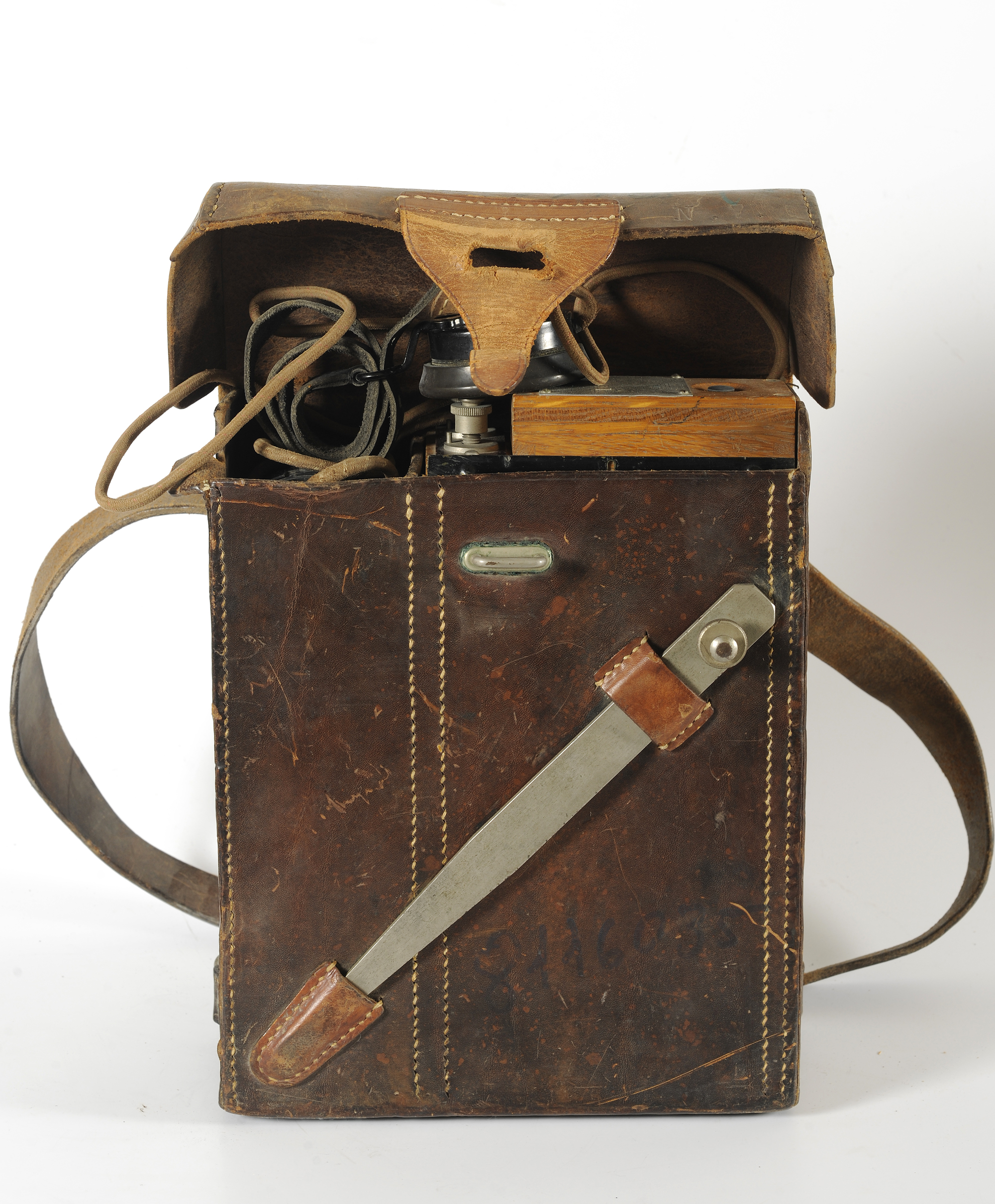
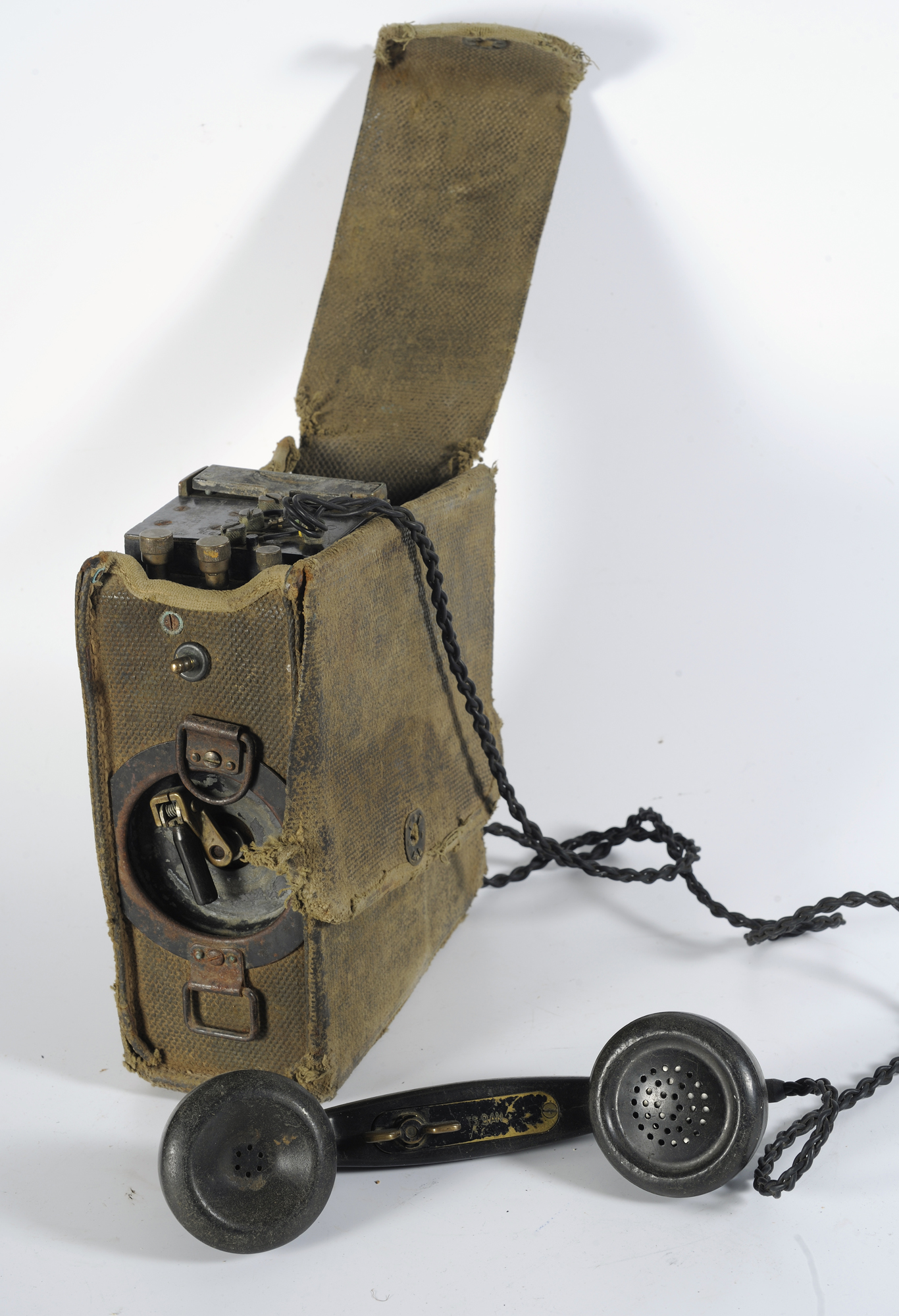
- Portable Siemens military telephone in a leather case.
- Wall-mounted magnetic telephone, type Festungsfernsprecher 38, manufactured by Siemens & Halske, used in fortresses. Its use by the Greek Army is doubtful. During the Occupation, the Germans installed such devices in forts, coastal batteries, and command posts.
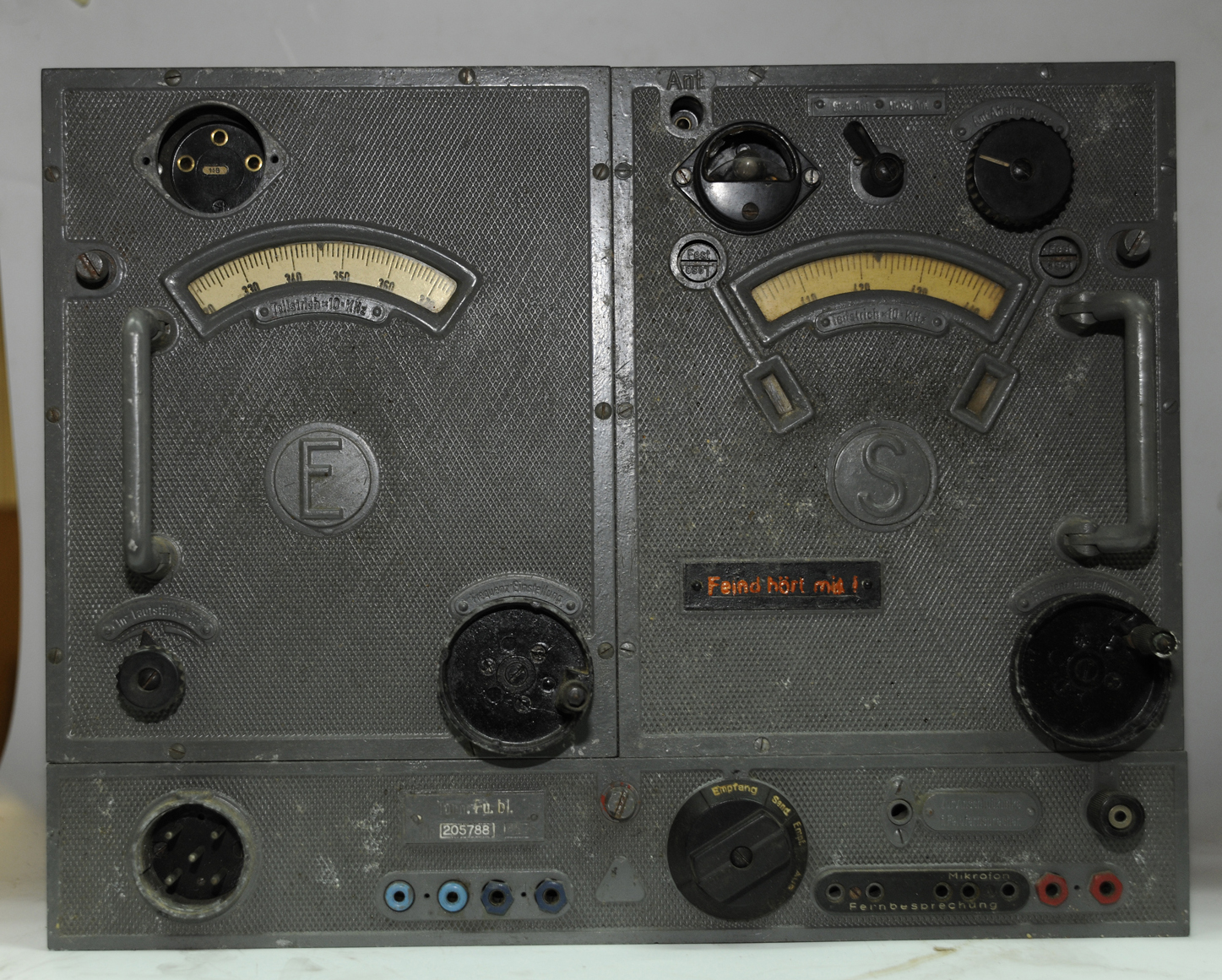
- German device for decrypting and intercepting radio signals. It was intended for military use and for intercepting enemy radio communications. The marking "Feind hört" = "The enemy is listening" is visible; this was a characteristic warning printed on communication materials to remind soldiers to be careful in their conversations.
- The EE-8 was a portable military telephone (field telephone) that was used extensively by the US Army during World War II. The EE-8 appears most often in the Civil War (1946–49), when the Greek Army was equipped with American equipment through the Marshall Plan. It was not used during the Greco-Italian War of 1940–41; at that time, mainly French, British, and German field telephones imported from previous decades were used.