
15 July 2026 Back to News
The “Iouliana” of 1965 as seen through photographs from the Museum’s archives
On July 15, 1965, Prime Minister Georgios Papandreou submitted his resignation to King Constantine II, plunging the country into the greatest political crisis of its postwar history, known as the “July Crisis.”
The rift was triggered by the king’s refusal to allow Papandreou to take over the Ministry of National Defense, replacing Petros Garoufalias, who had by then lost the prime minister’s confidence. Constantine refused to sign the relevant decree, citing the ongoing investigation into Andreas Papandreou’s alleged involvement in the case of the paramilitary organization ASPIDA.
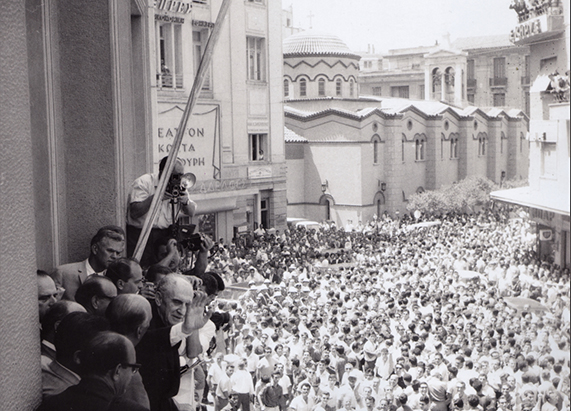
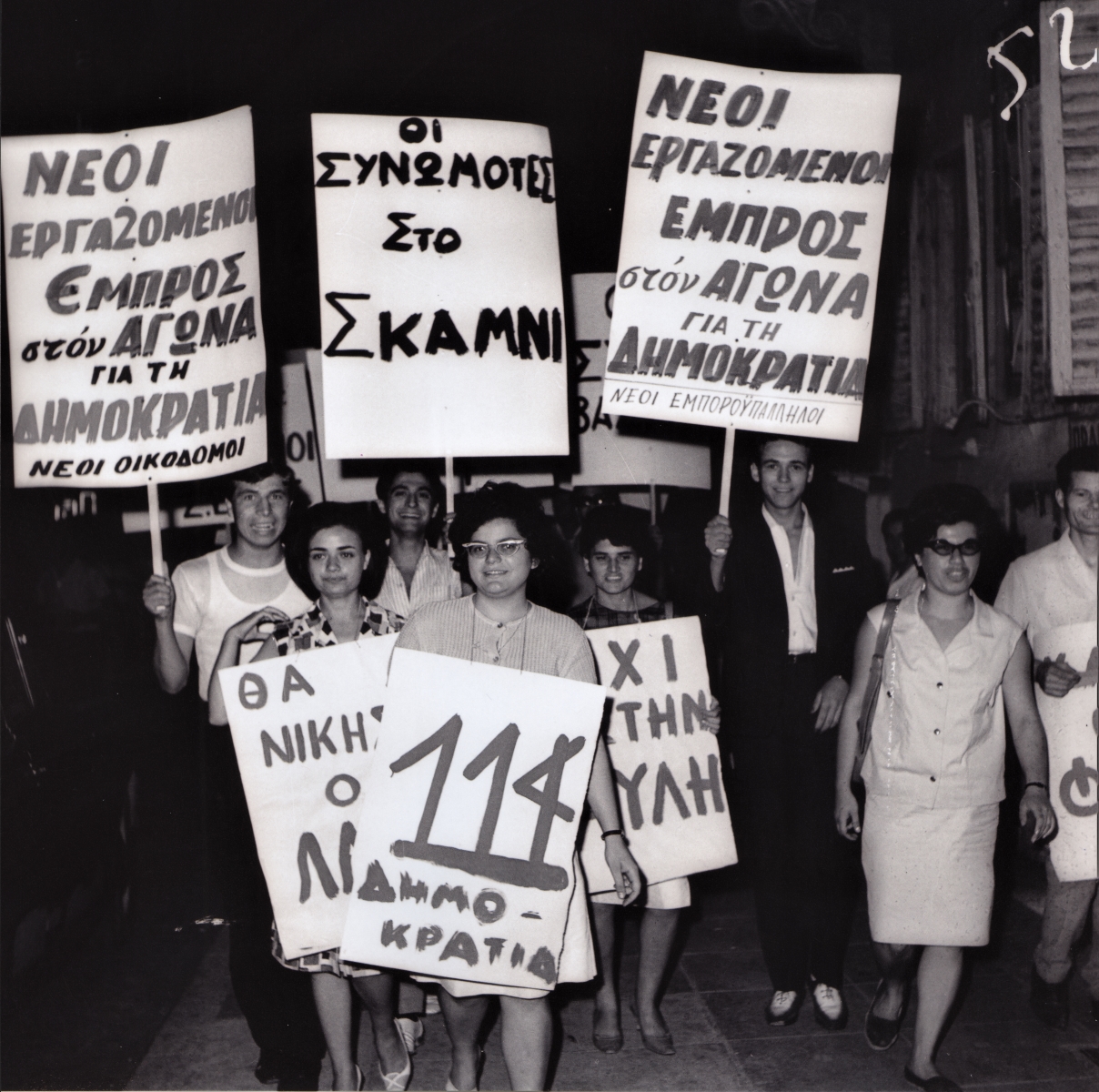
Immediately after Georgios Papandreou’s resignation, the king appointed the Speaker of the Parliament, Georgios Athanasiadis-Nova, who formed a government with the participation of members of the Center Union who had distanced themselves from their leader. At the same time, Papandreou took the lead in the “uncompromising struggle,” while thousands of citizens flooded the streets of Athens denouncing the “royal coup” and the “government of renegades.”
The Nova government failed to secure a vote of confidence and resigned on August 5. It was followed by the government of Ilias Tsirimokos, which met the same fate. Finally, on September 17, Stefanos Stefanopoulos, with the support of the Palace and 152 members of parliament—including 45 independent members of the Center Union—was sworn in as prime minister, marking the end of the “Julian” period.
The Stefanopoulos government remained in power until December 22, 1966, when it was replaced by the transitional government of banker Ioannis Paraskevopoulos, following an agreement between the king, Panagiotis Kanellopoulos, leader of the National Radical Union, and Georgios Papandreou. The goal was to hold elections by the end of May 1967, but they never took place, as the prolonged climate of instability ultimately led to the colonels’ coup on April 21, 1967.
The Telecommunications Museum presents the events of the “July Coup” through photographs from its collections (Floros Brothers Archive – Nikos L. Floros).
Photos from left:
- Georgios Papandreou at a rally on Christou Lada Street during the “July Events,” 1965.
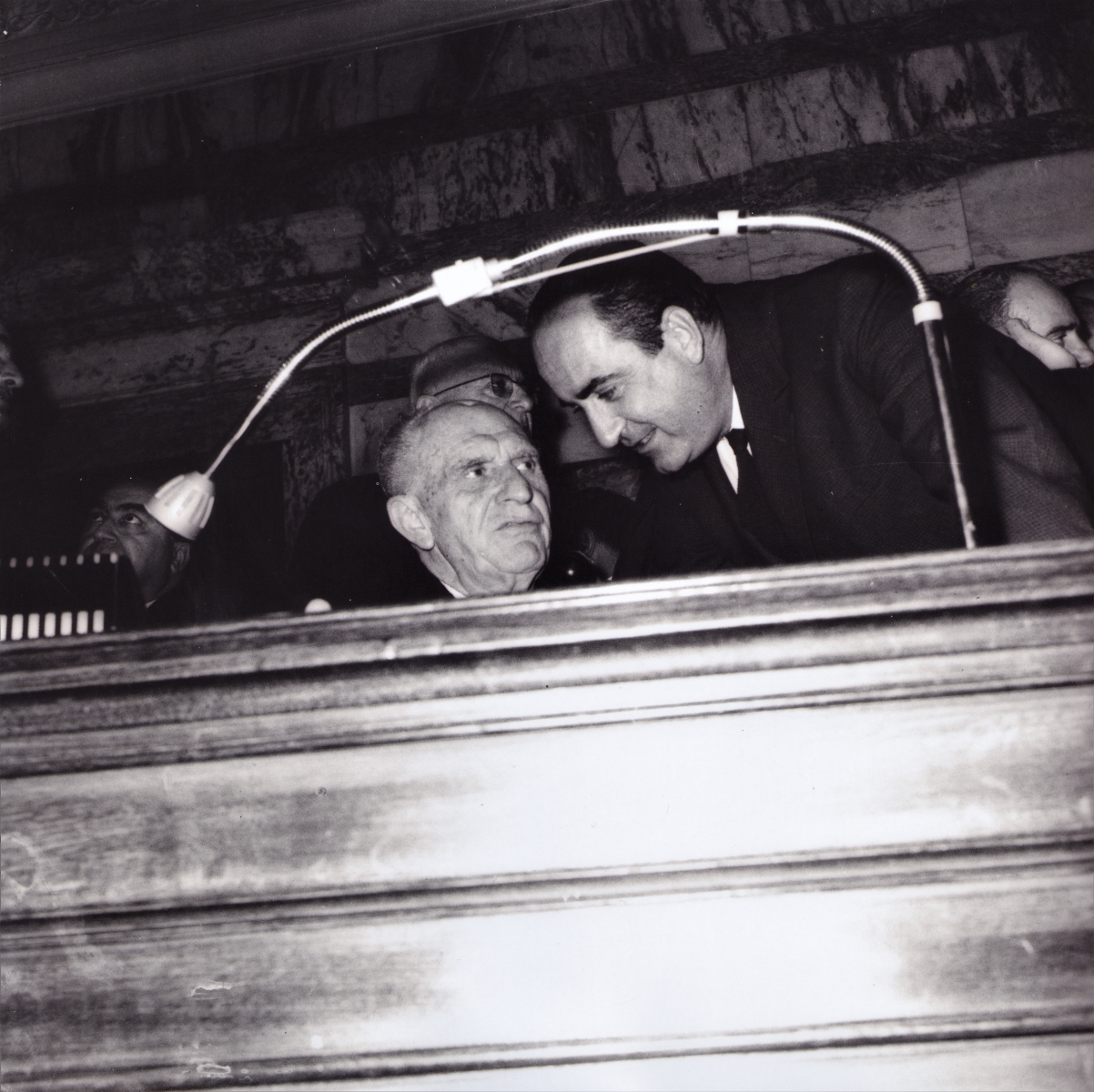
- Prime Minister Georgios Papandreou and Finance Minister Konstantinos Mitsotakis—who later served as a minister in the Athanasiadis-Nova and Stefanopoulos governments—in the Chamber of Deputies, 1964.
- A demonstration during the “July Events,” 1965.
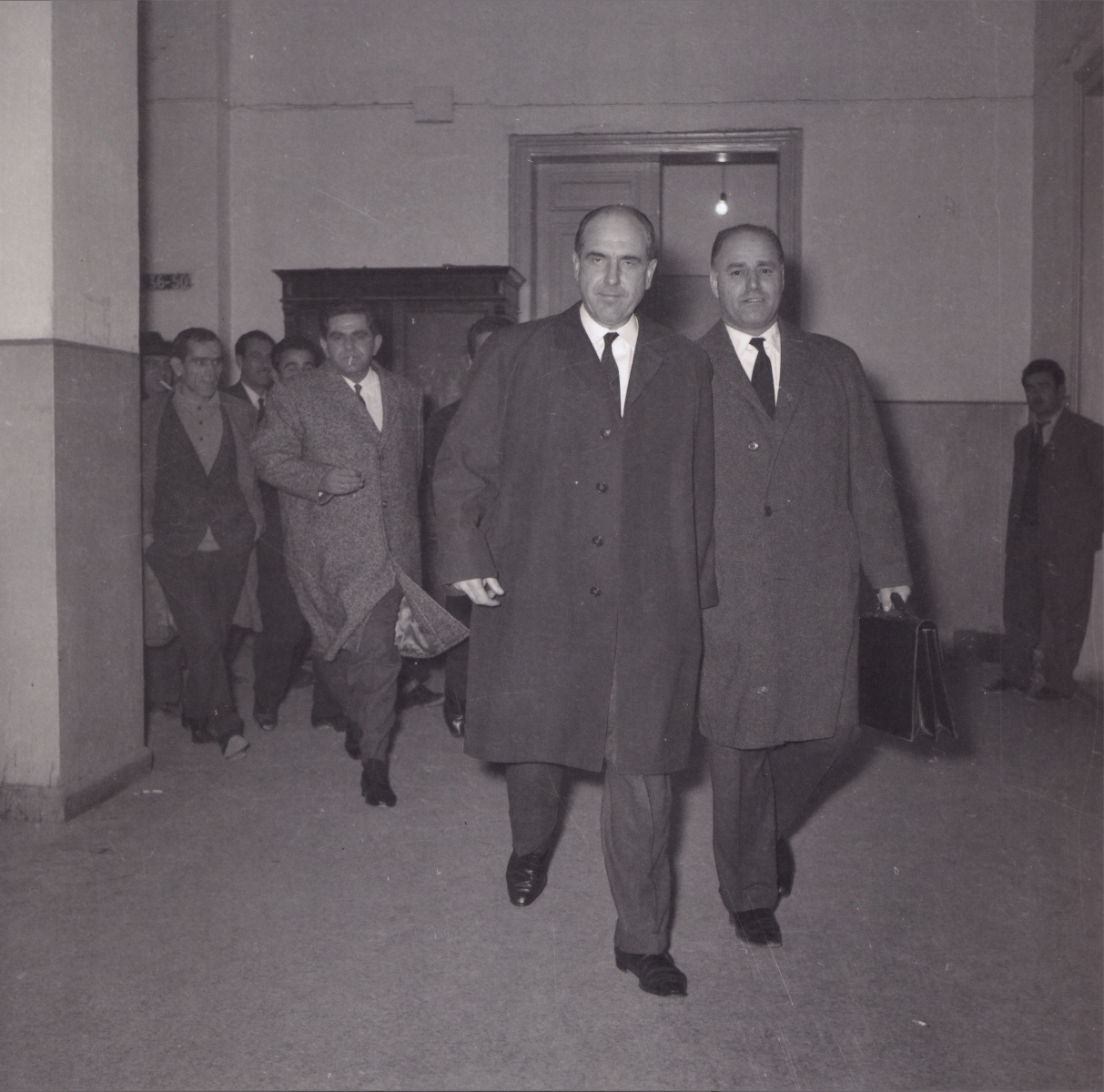
- Andreas Papandreou appears before the investigating judge in the ASPIDA case, accompanied by his attorney Agamemnon Koutsogiorgas, 1966.
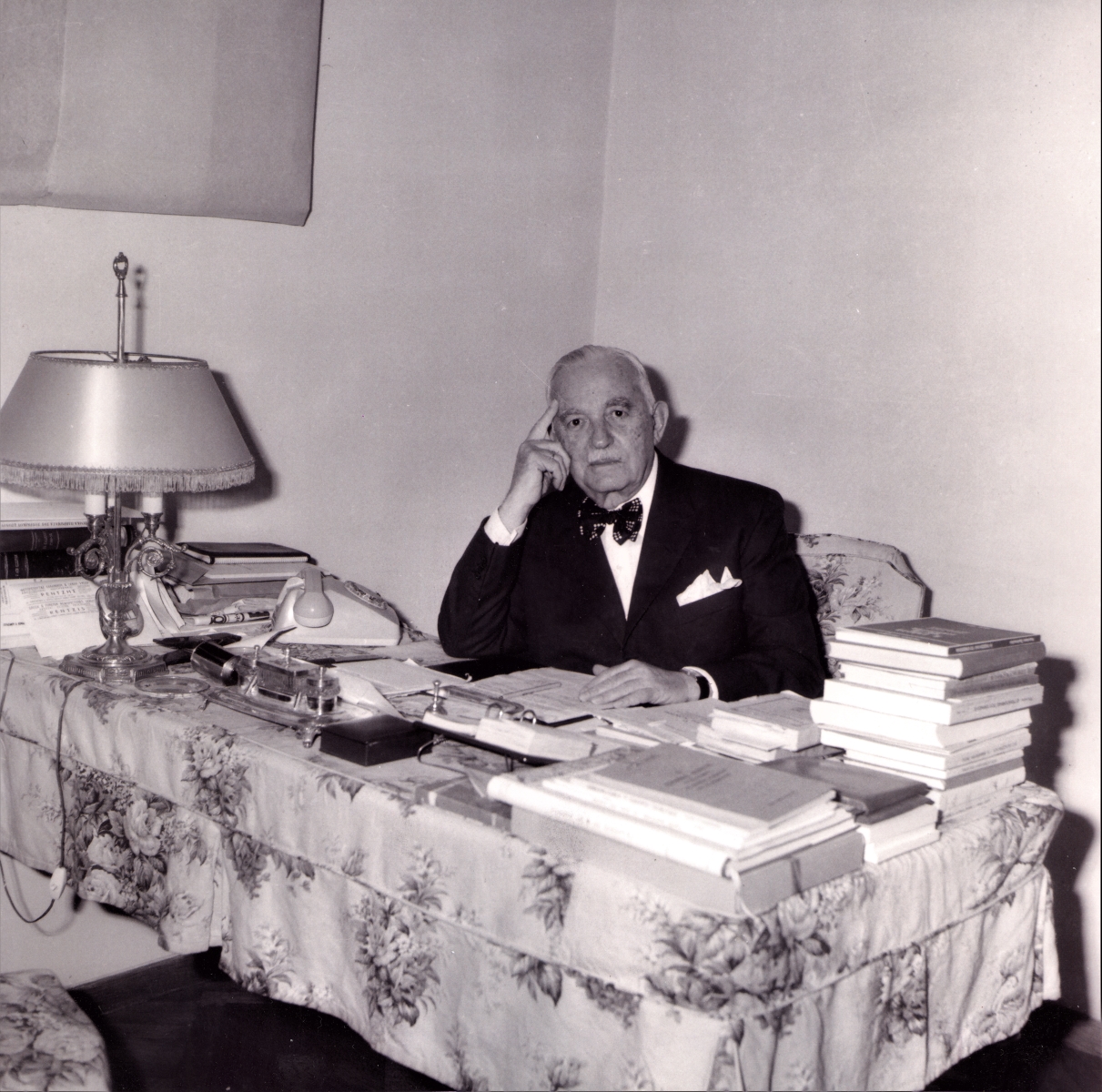
- Georgios Athanasiadis-Novas, in the early 1970s.